

IN DEFENSE OF REMEMBRANCE: COMEDY AND TRAGEDY IN A POST-MODERNIST SOCIETY
BY DEZZ JUST DEZZ
Oct 31, 2025
9/11 was bad. We say it in jest, as if massive tragedy is akin to low-hanging fruit, but we know it’s not “funny,” right?
Of course it’s not, but in a post-modernist society, it’s become impossible to feel any real semblance of “patriotism,” not to mention the ever present topic of genocide when referring to Palestine. We’ve become desensitized. Even calling the genocide in Palestine a “topic” feels like an injustice to the sheer amount of terror being faced. These conversations are deeply controversial, and in the event of Charlie Kirk’s assassination, many individuals have made statements against any humor, sharing the sentiment of Kirk being a father, a human being, a life lost. But why do the aforementioned, allegedly “mourning,” parties not offer the same for the thousands of children left with their limbs dangling from their bodies? Does the color of their skin and the country in which they live not allow this to be tragedy too?
After the events of 9/11, to be Muslim in America meant that you were under a constant surveillance from your peers. The held belief was that your religion, or simply your existence, equated to terrorism; as if you, a citizen, a worker, a mother, a student, a child, were solely responsible for extremism. We see this rhetoric now, too, with the threat of trans people being labeled as “nihilistic terrorists,” when we too are caretakers, friends, and human beings. The goal of this is not truly to pay any kind of respect to any lives lost, it’s an excuse to pass off bigotry. People with this mindset already held the ideals that Muslims were inherently despicable, all they needed to project this belief was an excuse to say it out loud.
Through a comedic lens, 9/11 was an outlier of its time. America had never seen anything quite like this before on our own terf, aside from perhaps Pearl Harbor, another touchy subject. Nobody knew how to react. Was anyone still allowed to be funny? This was a jumping off point for “too soon” humor. In a YouTube video essay shared by user American September, he accredits this phenomenon to Gilbert Gottfried’s roast of Hugh Heffner, in which some of the first unadulterated jokes were made on the tragedy. Of course, this was not the first joke of its kind, but it was clear that they were tame in comparison and posted with immense caution. American September shares that even The Onion took a two week break, returning with headlines such as “Not Knowing What To Do, Woman Bakes American-Flag Cake,” an almost perfect look into what the country was facing: confusion, and subsequently, guilt.
Where we would look in times such a these was to our country and to each other, sure, but more so, the media. The average citizen felt, and arguably, truly was, entirely helpless. What could be done from our couches? In the same page from The Onion, a small section entitled “How Have We Spent The Last Two Weeks?” has the author saying that they felt “guilty for renting video,” and had spent a majority of the time watching TV and “eating cheese doodles.” The best jokes, though, are the ones in which we laugh at ourselves, like The Onion, and even Joan Rivers, playing into her own audience shortly after the events with a joke about widows, and if you’d rather have a sloppy husband, or dead one with a fat check. To expunge guilt is to lean into it.
Seth McFarlane, creator of Family Guy, is known for having almost been on the plane when the attacks occurred. For him, there was no “panic moment.” He said, “People have a lot of close calls; you’re crossing the street, and you almost get hit by a car…this one just happened to be related to something massive.” When you are detached from something, no matter what way you experienced it, you don’t, or can’t, feel true guilt. “I really can’t let it affect me because I’m a comedy writer,” said McFarlane. “I have to put that in the back of my mind,” and eventually, it was able to front, with the infamous clip of Lois Griffin, telling a crowd that “9/11 was bad,” to much applause, but only after skepticism to the initial phrasing of simply the date. When people hear “9/11,” they become uneasy. Only are they satisfied when the comic and themselves share the same mentality, inherently funny or not.
Yet almost 10 years after, “meme culture” was in full swing, and somehow, 9/11 became not just an approachable topic, but a cultural phenomenon within Gen Z, a group of individuals who were either in the womb or not alive at all. Their parents witnessed the events for them, and the youth digested everything, like Seth McFarlane, it was just another day of misfortune. A lot of this humor was based not in complete truth, but in conspiracy. “Jet fuel can’t melt steal beams” became a running gag amongst class clowns, creating a sense of unease and fear in the government at the expense of the joke. Though as this generation ages, the blatancy of an unwelcoming political system is more present than ever.
We return to the assassination of Charlie Kirk, taking place on September 10th, 2025. The following day, there were a considerably noticeable lack of posts regarding the terrorist attacks. Naturally, when an event as such occurs, it will be spoken of, but was the sentiment not to “Never Forget”? This is not to say that anyone has forgotten anything, as the effects are still felt in the country today, but has society progressed far enough that in 24 years, we not only don’t feel it necessary to “meme” anymore, but we have almost seemed to move on entirely?
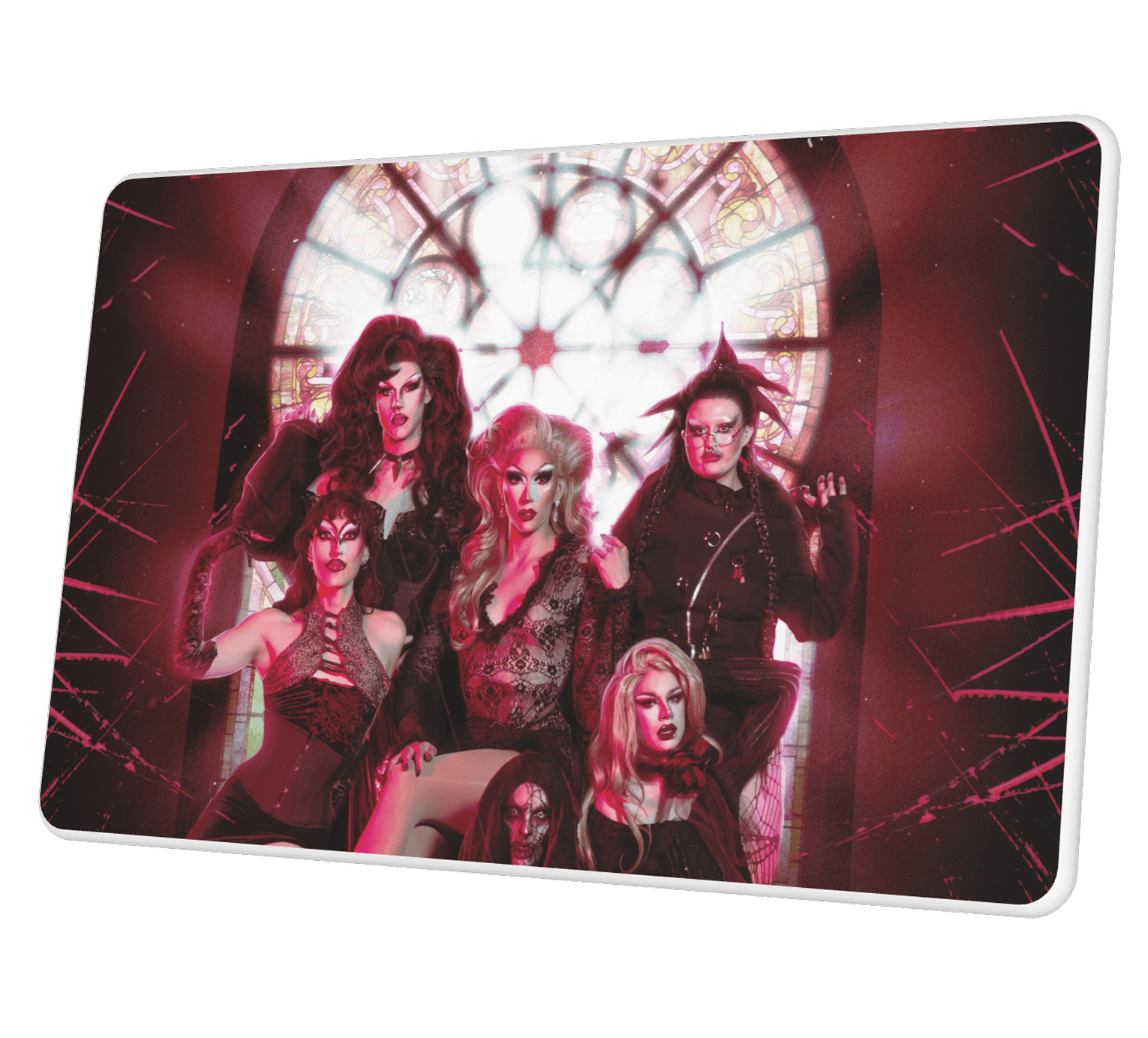
In creating Midnight Massacre: A Night Of Remembrance, myself and the team of course has reservations. Considering the entirety of the Trump administration, what was once a relevant case of what felt like easy offense, was now a larger statement to be made in and of itself. We were not aiming to just “remember 9/11,” or make any kind of comedic intent in the tragedy itself, but to speak on the untouchable nature of political commentary as a whole. Controversy would hold no weight if no one had an opinion on it. The nature of the show, while some acts did directly reference the attacks, was to fundamentally understand tragedy in a way that spoke to us. “9/12” was a catchy tagline, not because it was offensive, but because it felt familiar. We were playing to our strength of relatability, that even if you were not present on 9/11, you understood both the references being made, as well as the anxiety behind it. You were making a statement by consuming the content just as much as we had when saying, “Let’s do it anyways.” American September says, “the younger generations…felt liberated by breaking the rules,” and why shouldn’t we? What are rules, in a current age where even the big wigs of media production fear that they are on the government’s chopping block, if not meant to be broken?
While 9/11 is quite topical, it is also no exception to the anti-rule of “too soon” comedy. Kobe Bryant’s passing, COVID-19, and even the Epstein list have all been, for lack of a better term, under fire. COVID is a prime example. At a time where there was nothing else to be done besides doom scroll for months on end, what could we do besides laugh? This humor doesn’t come from malice, it comes from absurdity. There is just as much of a hopeful disbelief in the validity of the circumstances as there is a need for acceptance.
No one wants to accept negativity, though they know they must, therefore it becomes transformative. To once again quote American September, “Nothing is sacred, because comedy is a part of mourning,” and mourning is not a linear process at all. The emotion of tragedy must be processed into something beneficial, and that often is comedy. Joy is an act of protest, whether you mean to be subversive or not. The system is in place to create misery; the attacks of 9/11, no matter who you believe is to blame, occurred to disrupt an otherwise sensationalized country.
We must ask ourselves a few questions when finding tragic humor to be tasteless. Do we fear our government? Do we fear “the middle east?” Are we more so afraid of our own emotions, or is it always going to be too soon?